I am an M.S. student in Computer Science at San Diego State University, where I work as a research assistant with Bryan Donyanavard. I am applying to PhD programs for Fall 2027.
I am interested in programming languages and verification for concurrent and distributed systems. AI coding agents now produce code faster and in greater volume than humans can review, so compilers and verifiers have to become the reviewers. I want to build languages, type systems, compilers, and verification tools that make entire classes of bugs in these systems, such as memory-ordering and consistency bugs, unrepresentable. I want correctness to follow from construction rather than testing, and every rejected program should tell exactly what went wrong.
I came to this from building systems. At Sotoon, a cloud provider, I tracked down a data race in our Kubernetes storage plugin that could have deleted over 70 TB of customer data, exactly the kind of bug a type system can rule out. I have implemented lock-free data structures and hazard pointers in Rust, and I maintain shmem-bind, a Rust library whose types guarantee that shared memory is cleaned up.
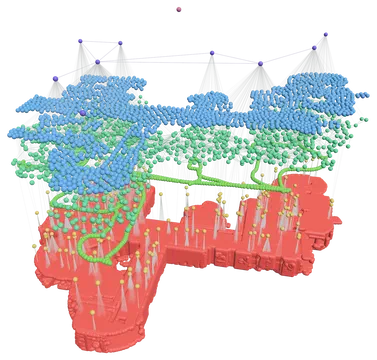
At SDSU I built Yggdrasil, a 3D scene graph library for robots that answers queries up to 121× faster than a published baseline. I am now extending it to multiple agents whose views of the world conflict, which is at heart a consistency problem.
Interests
Programming Languages
Formal Verification
Compilers
Concurrent and Distributed Systems
Type Systems
E-graphs and Equality Saturation
Systems Programming (Rust)
Education
M.S. in Computer ScienceSan Diego State UniversityFall 2025 - present
B.Sc. in Computer EngineeringSharif University of TechnologyFall 2018 - July 2024
Robotic agents use 3D scene graphs (3DSG) to perform tasks ranging from scene understanding to scene interaction. Although an extensive body of work addresses scene graph generation, little attention has been paid to optimizing the graph for consumption, which leaves state-of-the-art perception pipelines to work around their own scene graph and to pay a latency cost that does not fit the real-time budget a perception loop runs on. We present Yggdrasil, the first 3D scene graph designed to be efficient for both generation and consumption, a layer-first hierarchical graph built from generic nodes, edges, and layers, which expresses the representations existing pipelines already produce, indoor or outdoor, flat or hierarchical, while natively answering the positional and semantic queries downstream tasks issue. Against a published DSG baseline, Yggdrasil answers queries up to 121× faster, and every query we measure falls between 2 and 127 µs, three to five orders of magnitude inside the 200 ms keyframe budget a 3DSG consumer lives in, on both a workstation and embedded class device. We integrate Yggdrasil into three published pipelines spanning human trajectory prediction, object-goal navigation, and human-aware motion planning, where it removes up to 99% of the time each spends on its scene graph. The implementation, benchmark harness, and all three integrations are available online.
@misc{akhavan2026yggdrasil,
  title = {Yggdrasil: a Layer-First 3D Scene Graph for Real-Time Querying},
  author = {Akhavan, Arshia and Bartoli, Ermanno and Algharbi, Afnan and Hoseinpur, Alireza and Leite, Iolanda and Donyanavard, Bryan},
  howpublished = {arXiv preprint arXiv:2609.38640},
  year = {2026},
  doi = {10.48550/arXiv.2609.38640},
  url = {https://arxiv.org/pdf/2609.38640},
}
LinkAnchor: An Autonomous LLM-Based Agent for Issue-to-Commit Link Recovery
ArshiA Akhavan, Alireza Hoseinpour, Abbas Heydarnoori, Hamid Bagheri, Mehdi Keshani
Conference paperProceedings of the ACM on Software Engineering, Vol. 3, Issue FSE (FSE 2026, Montreal, Canada) · 2026
Issue-to-commit link recovery in software repositories is fundamental to software traceability and project management, yet it remains a challenging task. Prior studies show that only about 42.2% of issues on GitHub are correctly linked to their commits, highlighting the need for more effective solutions. Existing work has explored a range of ML/DL approaches, and more recently, large language models (LLMs) have been applied to this problem. However, these methods face two major limitations. First, LLMs are restricted by limited context windows and cannot simultaneously process all available data sources, such as long commit histories, extensive issue discussions, and large code repositories. Second, most approaches operate on individual issue–commit pairs, where a model independently scores the relevance of a single commit to an issue. This pairwise formulation fails to account for the complex associativity of software fixes, where an issue is often resolved by an aggregate chain of commits rather than a single atomic change. By ignoring these temporal and parental dependencies, existing methods often fail to incorporate the complete resolution logic and might misidentify intermediate commits as final fixes. Furthermore, this strategy is computationally inefficient in large repositories, as it requires exhaustively evaluating an enormous number of candidate pairs. To address these challenges, we present LinkAnchor, the first autonomous LLM-based agent designed specifically for issue-to-commit link recovery. LinkAnchor introduces a lazy-access architecture that allows the underlying LLM to dynamically retrieve only the most relevant contextual data, such as commits, issue comments, and code files, without exceeding token limits. Instead of isolated scoring, LinkAnchor treats link recovery as a dynamic search process, navigating the commit graph to identify the final resolving commit and effectively aggregating the entire chain of contributing changes. LinkAnchor is first to formalize ILR as dynamic heuristic search over commit chains (vs. prior pairwise scoring), enabling aggregate reasoning that recovers distributed fixes (46% of cases). Our evaluations show that LinkAnchor outperforms state-of-the-art baselines by 41–714% in Hit@1 across six large-scale open-source projects, while costing only about 0.01 US dollars per issue. Finally, LinkAnchor is designed and tested for both GitHub and Jira, and its modular architecture makes it straightforward to extend to other platforms.
@inproceedings{akhavan2026linkanchor,
  title = {LinkAnchor: An Autonomous LLM-Based Agent for Issue-to-Commit Link Recovery},
  author = {Akhavan, Arshia and Hoseinpour, Alireza and Heydarnoori, Abbas and Bagheri, Hamid and Keshani, Mehdi},
  booktitle = {Proceedings of the ACM on Software Engineering, Vol. 3, Issue FSE (FSE 2026, Montreal, Canada)},
  year = {2026},
  doi = {10.1145/3808191},
  url = {https://dl.acm.org/doi/10.1145/3808191},
}
LIA: Supervised Fine-Tuning of Large Language Models for Automatic Issue Assignment
Arsham Khosravani, Alireza Hoseinpour, ArshiA Akhavan, Mehdi Keshani, Abbas Heydarnoori
Issue assignment is a critical process in software maintenance, where new issue reports are validated and assigned to suitable developers. However, manual issue assignment is often inconsistent and error-prone, especially in large open-source projects where thousands of new issues are reported monthly. Existing automated approaches have shown promise, but many rely heavily on large volumes of project-specific training data or relational information that is often sparse and noisy, which limits their effectiveness. To address these challenges, we propose LIA (LLM-based Issue Assignment), which employs supervised fine-tuning to adapt an LLM, DeepSeek-R1-Distill-Llama-8B in this work, for automatic issue assignment. By leveraging the LLM’s pretrained semantic understanding of natural language and software-related text, LIA learns to generate ranked developer recommendations directly from issue titles and descriptions. The ranking is based on the model’s learned understanding of historical issue-to-developer assignments, using patterns from past tasks to infer which developers are most likely to handle new issues. Through comprehensive evaluation, we show that LIA delivers substantial improvements over both its base pretrained model and state-of-the-art baselines. It achieves up to +187.8% higher Hit@1 compared to the DeepSeek-R1-Distill-Llama-8B pretrained base model, and outperforms four leading issue assignment methods by as much as +211.2% in Hit@1 score. These results highlight the effectiveness of domain-adapted LLMs for software maintenance tasks and establish LIA as a practical, high-performing solution for issue assignment.
@misc{khosravani2026lia,
  title = {LIA: Supervised Fine-Tuning of Large Language Models for Automatic Issue Assignment},
  author = {Khosravani, Arsham and Hoseinpour, Alireza and Akhavan, Arshia and Keshani, Mehdi and Heydarnoori, Abbas},
  howpublished = {arXiv preprint arXiv:2601.01780},
  year = {2026},
  doi = {10.48550/arXiv.2601.01780},
  url = {https://arxiv.org/pdf/2601.01780},
}
Automated Bug Triaging using Instruction-Tuned Large Language Models
Bug triaging, the task of assigning new issues to developers, is often slow and inconsistent in large projects. We present a lightweight framework that instruction-tuned large language model (LLM) with LoRA adapters and uses candidate-constrained decoding to ensure valid assignments. Tested on EclipseJDT and Mozilla datasets, the model achieves strong shortlist quality (Hit at 10 up to 0.753) despite modest exact Top-1 accuracy. On recent snapshots, accuracy rises sharply, showing the framework’s potential for real-world, human-in-the-loop triaging. Our results suggest that instruction-tuned LLMs offer a practical alternative to costly feature engineering and graph-based methods.
@misc{kiashemshaki2025automated,
  title = {Automated Bug Triaging using Instruction-Tuned Large Language Models},
  author = {Kiashemshaki, Kiana and Khosravani, Arsham and Hosseinpour, Alireza and Akhavan, Arshia},
  howpublished = {arXiv preprint arXiv:2508.21156},
  year = {2025},
  doi = {10.48550/arXiv.2508.21156},
  url = {https://arxiv.org/pdf/2508.21156},
}
Building Yggdrasil, a 3D scene graph for robots, written in Rust and designed for both construction and querying. Its layers form a DAG rather than a stack, and it answers pattern-matching, nearest-neighbor, field-of-view and traversal queries in place, using per-layer and per-node spatial indexes it keeps current as the graph changes.
Every measured query takes 2–127 µs, up to 121× faster than a published C++ baseline. Yggdrasil is integrated into three published robotics pipelines and removes up to 99% of the time they spend on their scene graph operations.
Currently extending Yggdrasil to multi-agent settings where each agent contributes its own view of the world, and a global server resolves the logical and semantic conflicts between them.
AEBench measures how effective AI agents are in reproducing the results of published systems artifacts, and proposes a systematic framework for evaluation and execution of AI agents on artifact evaluation.
The goal is to provide Artifact Evaluation Committees with a tool to fully automate the evaluation process via use of AI agents.
Graduate Researcher (LLM Agents for Software Engineering)
Code o She’r is a Spaghetti Code Challenge that focuses on undefined behavior and exploits architectural behaviors of computers and compilers with the aim of hosting an environment for contestants to become more familiar with the field of computer systems.
As the Founder and President of Code o She’r, I took on the role of leadership over a team of 70+ members and oversaw various flows from design, marketing, and executive duties to scientific and technical tasks.
Vice President of Technology
SSC
2020 – 2021·Tehran
View more ↓View less ↑
Students’ Scientific Chapter (SSC) is a scientific association consisting of all students of Computer Engineering Department of Sharif University of Technology. It holds scientific talks and events throughout the year. Its central council consists of nine members, selected by votes of all students.
I was elected vice president of technology of the SSC for one academic year, after receiving the most votes in the general election and then the votes of the other central council members.
Chief of Technical Staff
ICPC Asia Tehran Regional Contest 2023
2024·Tehran
View more ↓View less ↑
The ICPC International Collegiate Programming Contest, known as the ICPC, is an annual multi-tiered competitive programming competition among the universities of the world.
As Chief of Technical Staff, I led a technical team of 10 members and addressed a variety of technical needs, such as:
Build contest-customized OS images and distribute them on contestants’ hosts using PXE Network boot.
Manage and configure hosts used by contestants and monitor their connectivity.
Restrict external access and host to host access of each contestant’s host device.
Ensure network performance and fairness between different devices used by the contestants.
Chief of Technical Staff
ICPC Asia Tehran Regional Contest 2022
2023·Tehran
Chief of Technical Staff
ACM-ICPC Asia Tehran Regional Contest 2019
2019·Tehran
Chief of Technical Staff
The 2019 ICPC Asia-West Continent Final Contest (Tehran Site)
2020·Tehran
Chief of Infrastructure and System Team
Sharif AI Challenge 2021
2020 – 2021·Tehran
View more ↓View less ↑
AIC is the biggest AI contest in the country, in which teams develop AI strategies to compete against other teams.
As the Chief of Infrastructure and System Team, I was tasked with leading a team of 4 to address the Infrastructure needs of the contest:
Develop an event-driven matching system.
Design and Develop an auto-scaler system for the matching infrastructure to ensure minimum latency for the matches.
Ensure fair resource allocation between rival binaries.
Create an isolated sand-box for each contestant binary and eliminate any side-channel attack that may affect the fairness of the results.
Maintain data storage for everything from game logs to contestant binaries and monitoring data.
Yggdrasil is a layer-first hierarchical 3D scene graph for robotic agents, designed to be efficient for both generation and consumption.
Nodes carry key–value features and optional coordinates, layers form a DAG, and nearest-neighbor, radius, field-of-view, semantic, and subgraph queries are built in.
Written in Rust, with Python bindings (PyO3) and an interactive 3D visualizer built on Bevy.
Ark is a VPN protocol wich tries to obfuscate network traffic
by swapping network protocol between TCP and UDP
to stay hidden in the eyes of the adversary
Ark re-implements the TCP protocol on the client systems and send TCP data via UDP protocol and vise versa.
Doing so, the input and output traffic of the server node are no longer of the same protocol and the server node
can stay hidden from the eyes of the adversarial agent in the network.
for more information check the code repo.
This was my thesis project and i worked on different layers of network and did manual packet parsing and re-implemented
the TCP stack to better fit Ark’s customize needs.
The thesis project was suppervised by Dr. Mahdi Jafari Siavoshani at Sharif University of Technology.
Implemented hazard pointers in Rust for safe memory reclamation in lock-free data structures.
Hazard pointers let a thread announce which shared nodes it is about to read, so that other threads defer freeing them. This implementation provides safe memory reclamation for lock-free data structures in Rust.
A 4G/5G cell network simulator that virtualizes the entire Layer 1–3 stack.
Users can route arbitrary TCP/UDP traffic through the simulation with standard commands (e.g., curl), without modifying the Layer 4 application or benchmarks.
Group project for CS 576 at San Diego State University.
Implemented and designed a Health Monitoring System.
Our product can measure a patient’s SpO2, heart rate, body temperature, ECG, and Environmental Temperature and Humidity.
The project’s core is based on Raspberry Pi 4 while using Arduino Uno as the ADC for some of the sensors. It features a complete monitoring system that can be viewed on smartphones, desktop monitors, and small monitors that could be connected to the Raspberry Pi. Our product can send the collected data to a central server for further analysis. It is noteworthy that our team designed the project’s packaging, and its prototype was produced using a 3D printer.
Technologies used: Raspberry Pi and Arduino for the core hardware part, React Native for the front end of the application, Django for the server, and Docker as the containerization platform.
The course in which we did this project was taught by Dr. Alireza Ejlali and Amin Fos’hati at Sharif University of Technology.
Optimized Sparse-Matrix Vector Multiplication using different parallelism and concurency methods.
I developed SpMV method using the following different framework:
multi threading
OpenMP
Rayon-rs
Vector processor (intel AVX-2)
SIMD (using Cuda on Nvidia GPU)
Since each approach takes a different prespective to the problem,
a different set of algorithm and data structure was needed to achieve peak performance in each senario.
As part of the task, I studied and implemented a variety of solutions proposed in defferent researches and evaluated their performance.
(full details in the repo)
In this course, we implemented a real-time Clock management system using threading capabilities of Realtime Java, alongside a minimalistic GUI using Swing.
The course in which we did this project was taught by Dr. Mohsen Ansari at Sharif University of Technology.
I have done a project implementing a Peer-to-Peer network using Python.
We did this project in a group of three. The project was about designing a P2P network with a binary tree structure. I worked on the core data structure, implemented different types of packets, and designed a simple P2P chat application based on this network.
The course in which we did this project was taught by Dr. Mahdi Jafari Siavoshani at Sharif University of Technology.
We did this project in a group of four, in which we used remote pair programming techniques to design and work on the project together. I worked on all three phases of the project, including designing and implementing User Programs, Threads, and FileSystem on PintOS, an educational OS developed in C.
The course in which we did this project was taught by Dr. Mehdi Kharrazi at Sharif University of Technology.
Sotoon is a B2B cloud provider that focuses on reliable and scalable computing solutions.
I worked in the K8s-as-a-Service team, designing and maintaining Sotoon’s Kubernetes engine
and several integrations to Sotoon’s services, such as CSI, CNI, and Auto-scaler.Key Achievements:
Automated management of 90+ Kubernetes clusters, optimizing operational efficiency and reducing tickets by 30%.
Achieved a 40% reduction in initial cluster costs by eliminating duplicated system components and introducing multi-tenancy.
Redesigned cluster network topology to enhance security and abstract control plane management from customers.
Planned and led the migration of over 100 customers’ k8s-clusters to the new infrastructure with zero downtime.
Implemented an A/B testing framework for cluster updates, preventing 5 otherwise catastrophic failures.
Investigated and debugged a critical data race issue in the CSI plug-in that could have resulted in the deletion
of over 70TB of client storage data, ensuring data integrity and service reliability.
Automated the CI/CD pipeline for OS image creation, reducing new k8s version release time from 1 week to 1 day.
Digikala is the largest e-commerce company in the Middle East, serving over 40 million users.
As part of the Big Data & AI team, I was responsible for building and maintaining the infrastructure
required to efficiently store, process, and manage the vast amounts of data generated by user activity.Key Achievements:
Developed a Parallel Data Query Engine on top of Apache Spark, revising data retrieval models
and queries to reduce resource usage by 23% and computation time by 43%.
Reduced API latency by identifying blocking operations in an asynchronous workflow, optimizing the
critical path to triple requests per second (RPS).
Designed and maintained a data platform using K8s for orchestration, Ceph for storage, Airflow
for scheduling, Spark for batch/stream processing, and Kafka with Debezium for database synchronization.
Implemented GitOps-based infrastructure management with ArgoCD, automating API deployments via
Kustomize and Helm, reducing release cycles from 6 months to 6 hours.
Deployed and maintained a staging environment and built a framework for the Data Science team,
reducing their development time significantly.
Tapsell is a leading AdTech company in the Middle East. As part of the DevOps team,
I provided cloud infrastructure and platform services that enabled other technical teams to build,
deploy, and scale their applications efficiently.Key Achievements:
Optimized Cassandra’s disk usage for different workloads, resulting in a 90% reduction in disk usage for some of our clusters.
Designed and implemented a fully automated backup, validation, and restore system for our cloud-native infrastructure,
replacing the legacy solution while preserving backward compatibility to enable seamless,
incremental migration of 30TB+ of data with zero downtime.
Built and maintained infrastructure by deploying a staging cluster on K8s, developing CI/CD pipelines with GitLab CI,
automating provisioning with Terraform on VMWare, and administering Linux-based VMs to resolve network bottlenecks and improve performance.